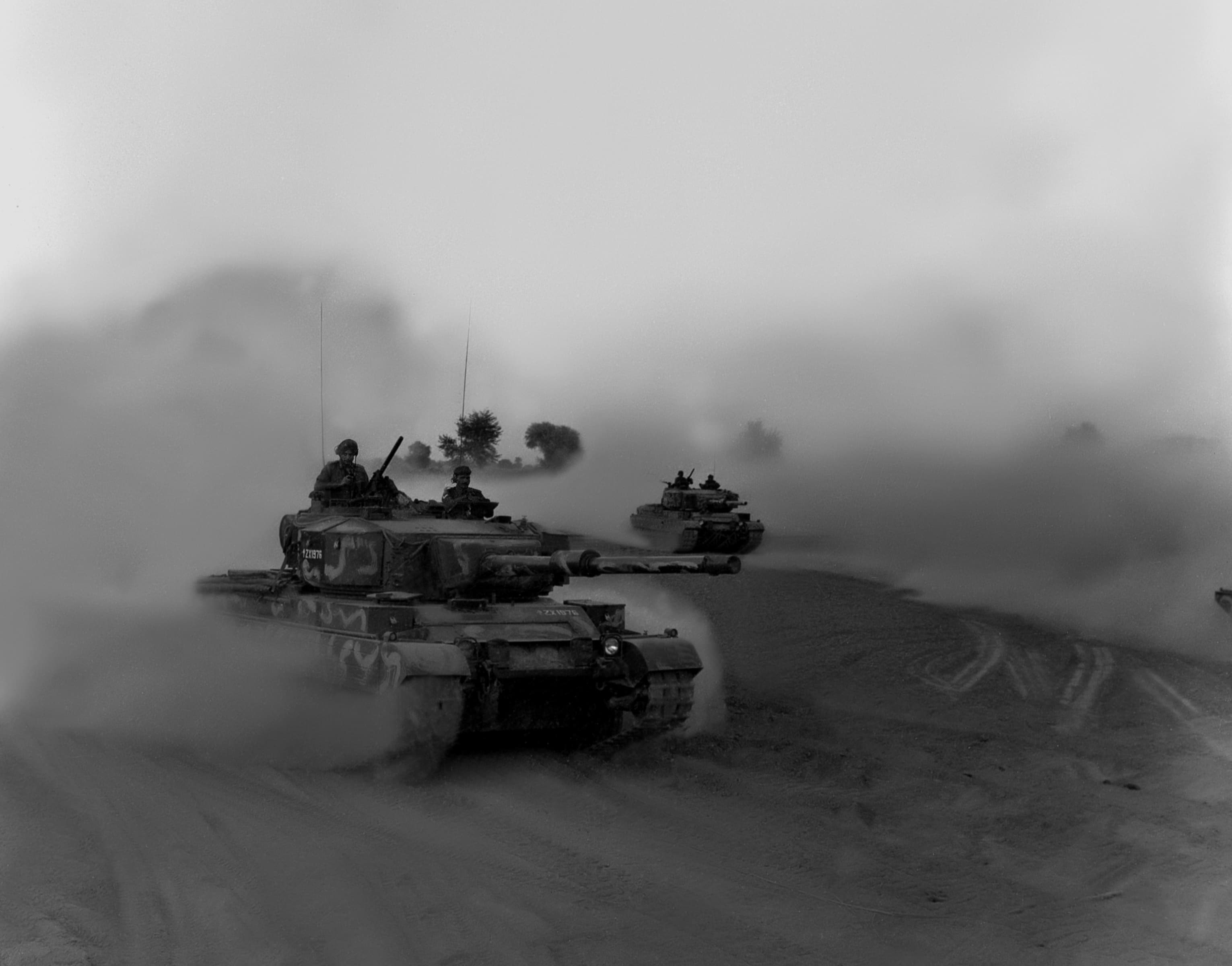
In September 1965, the plains of the Shakargarh Bulge became the theatre for some of the fiercest armoured clashes since World War II. As the Indo-Pak War escalated, India's newly raised 1 Corps launched a massive counter-offensive into Pakistani territory. But beyond the sheer firepower of the Centurion and Patton tanks, the battles of Phillora and Chawinda stand as a profound study in crisis leadership and operational command.
The military manoeuvres on those dusty plains offer enduring lessons on how to guide teams through high-stakes, volatile environments.
Reshaping the Battlefield
True leadership requires the vision to change the rules of the game when cornered. Facing heavy Pakistani pressure in the Chhamb sector — which threatened to cut off Jammu and Kashmir entirely — the Indian Army did not just dig in and defend. Instead, they launched a bold, strategic counter-thrust into the Rachna Doab.
This masterstroke forced the opposing army to abandon their offensive and scramble to protect their own territory. It proves that effective leaders do not just react to a crisis; they reshape the battlefield to their advantage. On the ground, commanders translated this grand strategy into textbook tactical manoeuvres, using a pincer movement to draw out the enemy armour and systematically dismantle their defensive lines.
The Power of Shared Risk
The most brilliant strategy falls apart without commanders who are willing to bleed for it. The tank battles of 1965 were won by men who led from the turret, not a distant headquarters.
When his regiment engaged enemy armour, Lt. Col. M.M.S. Bakshi of 4 HORSE didn't hesitate. He led the charge himself. Even after his tank took four direct hits and caught fire, Bakshi bailed out, evaded capture in a crossfire-riddled sugarcane field, and immediately returned to resume command of his men.
The ultimate demonstration of this ethos came from Lt. Col. A.B. Tarapore of 17 HORSE. Tasked with capturing Chawinda from the rear, Tarapore spearheaded the armoured charge. Severely wounded in the ensuing firefight, he flatly refused medical evacuation. He stayed in command, directing the battle until a direct artillery hit claimed his life. These men demonstrated that a leader's greatest tool for building morale and commanding respect is the willingness to shoulder the exact same risks as their frontline troops.
Decisiveness Over Perfection
In armoured warfare, hesitation is fatal. The engagements around Phillora were characterised by extreme proximity, with moving tanks firing at ranges of a mere 100 yards. There was no time for prolonged analysis or seeking absolute certainty.
Commanders had to rely on their training, instantly assess the threat, and strike. When Lt. Col. Bakshi was heavily outnumbered, he didn't pull back to reassess; he charged directly through the burning enemy lines to shatter their formation. In environments defined by chaos and danger, a swift, committed decision executed with absolute conviction is far superior to delayed perfection.
The clash at the Shakargarh Bulge ultimately decimated the opposing armour and broke the enemy's offensive capability. Yet, the victory was not won merely by superior machinery. It was secured by leaders who combined audacious strategy, rapid decision-making, and a relentless, self-sacrificing drive to lead from the very front.