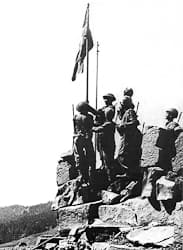
During the 1999 Kargil War, the capture of Tiger Hill became a defining moment that tested the absolute mettle of the Indian Armed Forces. Rising majestically to over 16,500 feet with steep, snow-covered rocky slopes, the colossal mountain offered the enemy a commanding view of the Mushkoh region, Drass village, and the vital national highway. Retaking this imposing feature demanded more than just manpower; it required exceptional junior adaptive leadership and the ability of young officers to take immediate command and make rapid decisions under intense fire.
Adaptive Preparation and Planning
The 18 GRENADIERS, driven by an unyielding thirst for redemption after earlier setbacks at Tololing, were assigned to retake the mountain alongside the 13 JAK RIF and 2 NAGA. Recognising the critical need for adaptability, the commanding officer ensured that all training sessions and bunker destruction exercises incorporated the valuable lessons learned from prior operations. This rigorous, adaptive preparation allowed the soldiers to rectify past deficiencies and thoroughly prepare their tactics before executing a meticulously orchestrated, multi-directional attack plan.
Taking Command Under Fire
When the assault commenced on July 3, junior officers immediately took command of the battlefield's shifting and chaotic realities. Major RS Rathore demonstrated unwavering determination by skilfully leading A Company to successfully capture the Tongue feature, maintaining momentum until their progress was impeded by a relentless enemy barrage.
Simultaneously, Lieutenant Balwan Singh spearheaded the North-Eastern advance with his Ghatak Platoon to establish a crucial foothold. When thrust into fierce hand-to-hand combat and gradually pushed back, Lieutenant Singh adapted his tactical approach. He guided his platoon to take refuge at D Company's position, preserving his force just 30 metres away from the pinnacle.
Decisive Action and Bold Counterattacks
The capacity of junior leaders to adapt and press the offensive was further exemplified on the night of July 4 and 5. Captain Nimbalkar, alongside a wounded but resolute Lieutenant Balwan Singh, executed a calculated and stealthy uphill manoeuvre to successfully reach the summit of Tiger Hill. Lieutenant Singh displayed unwavering determination by valiantly leading his platoon into the ensuing battle despite his injuries.
As the battle escalated and casualties mounted under extensive enemy artillery fire, adaptive decision-making on the front lines proved critical to survival and success. Lieutenant RK Sherawat and Captain Nope Singh moved up to reinforce the positions, mustering a strength of about seventy soldiers between the Top and Tongue. Facing heavy fire and severe exposure, the units made a bold, on-the-spot decision to launch a swift counterattack to reclaim the Helmet feature. This determined action completely surprised the enemy, breaking their morale and forcing a chaotic retreat to Shivling and Point 5060.
Securing the Summit
The final phase of the battle was marked by highly coordinated efforts led by junior commanders. Captain Das Gupta undertook the mission to capture Rocky Knob with C Company and the Ghataks, while other companies secured the Collar and the reverse slopes of the Top. By seamlessly adapting to battlefield friction and taking absolute command of their respective units, these young officers established a unified front, officially securing Tiger Hill and turning a perilous ascent into a historic military triumph.