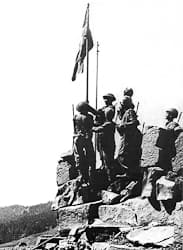
The Kargil War of 1999 presented the Indian Armed Forces with one of their most daunting challenges since the 1971 Bangladesh Liberation War. Pakistan's primary objective was to obstruct access to the Srinagar-Kargil-Leh highway, making the occupation of Tololing a strategic linchpin. Reclaiming this mountain was paramount for India to restore traffic on NH 1A and pave the way for offensives against Tiger Hill. However, the ensuing battle between May 22 and June 16 required more than just troop numbers. It demanded exceptional decision-making abilities and a profound willingness from junior leaders to take command of the operation under extreme duress.
The Harsh Realities of Decentralised Command
Standing at 16,000 feet above the town of Drass, Tololing offered no concealment for advancing troops along its steep, solitary trail. Pakistani forces utilised their dominating heights, concrete bunkers, and fortified sangars to rain down heavy fire — and eventually stones and boulders — upon the ascending Indian soldiers. Temperatures plummeted between -5 and -11 degrees Celsius amidst howling winds, heavy rain, and fog. In such a chaotic and punishing environment, centralised control inherently fractures. The burden of tactical execution, momentum, and immediate decision-making fell squarely onto the shoulders of junior leadership.
Initiative and Adaptation Under Fire
When the assault began, the plan relied heavily on young officers taking decisive action on the ground. On May 22, Captain SA Nimbalkar bravely led the Ghatak (commando) platoon forward along the south-east spur. Although heavy defensive fire pinned his troops down just 300 metres from the objective, the ability of junior leaders to maintain discipline and hold their ground in freezing, exposed conditions was critical.
Recognising the stalemates on the primary approaches, the operation required rapid tactical adjustments. Junior commanders were subsequently deployed to disrupt enemy reinforcement lines from Point 5140 and the Hump. Captain Joy Dasgupta, leading C Company, and Captain NS Rathore, leading D Company, navigated their units along the south-western approach. Though they were also forced to halt 400 metres from Point 4590 due to fierce resistance, their ability to manoeuvre and apply pressure demonstrated the operational agility that junior leaders brought to the battlefield.
Leading from the Front
Taking command in the mountains of Kargil meant leading from the front, often at the ultimate cost. During a renewed night assault on May 30, junior leaders drove the advance forward along the South spur. Lieutenant Balwan Singh commanded a divided group of the Ghatak platoon, while Major Rajesh Adhikari led B Company. Exercising immense combat leadership, Major Adhikari pushed his men to within a mere 25 metres of the objective before he was fatally struck in the head by an enemy bullet.
Decisive Action Secures the Summit
The gruelling three-week battle culminated in a synchronised assault requiring rapid decision-making as operational realities shifted. After 2 RAJPUTANA RIFLES launched their decisive assault on Tololing on June 13, the 18 GRENADIERS were tasked with securing the connected whale-shaped ridge known as the Hump. When the initial attacking unit encountered devastating enemy artillery fire and suffered significant casualties, the junior leaders of the reserve C and D Companies had to instantly take command of the situation. They stepped up, navigated the heavy fire, and successfully captured the Hump on the morning of June 14, securing a vital foothold that enabled the 13 JAK RIF to launch further assaults on Point 5140.
The capture of Tololing was a pivotal moment in the war. The indomitable spirit required to secure this victory was fuelled by junior officers who possessed the decision-making ability to adapt to brutal geography, the resilience to endure heavy casualties, and the fortitude to take command when the battle demanded it most.